Buy a Rental Now or Wait for Rate Cuts? 2026 Cash Flow Math
If you are weighing buy rental property now or wait for rate cuts, the only honest answer is the math on your listing — not the market label. Below: six real deals, four underwriting scenarios each, and how DSCR, cash flow, and cash-on-cash move as rates step down the ladder. For macro context, see the U.S. housing market dashboard.
By Kolton Dupey · April 14, 2026 · 10 min read
Quick answer
- Rate cuts can help rental cash flow — especially on leverage-heavy loans.
- They rarely rescue a bad deal. Price, rent, taxes, insurance, vacancy, and OpEx usually move the outcome more than a small rate change.
- A lower rate matters most when the deal is already close to working.
- Do not wait on headlines. Run today's rate, a few lower rates, and a lower price case on the same property.
Run this same rate-cut analysis on your rental property
Clone one saved analysis at multiple rates — the same workflow we used for this post — in the rental property calculator.
What we tested
- • 6 real rental listings (3 Des Moines, 3 Houston) from live Zillow
- • 4 mortgage rates each — 7.0%, 6.5%, 6.0%, 5.5% (24 analyses total)
- • Tracked monthly cash flow, DSCR, cash-on-cash return, and Will It Flow verdict at each step
- • Asked whether each deal improved enough to matter for a buy / wait / pass decision
How we ran this
- • 6 real listings — three in Des Moines, IA and three in Houston, TX — pulled from live Zillow this week
- • 4 rate scenarios per property — 7.0%, 6.5%, 6.0%, 5.5%
- • 24 full analyses run through Will It Flow with identical assumptions: 25% down, 30-year, 5% vacancy, 5% maintenance, 5% CapEx, self-managed, 3% appreciation, 3% rent growth, 2% expense growth
- • Rents sourced from Will It Flow's built-in Rent Comps tool — no inflated estimates
- • Live Freddie Mac PMMS data as of April 9, 2026
- • Every PDF deal sheet below was exported directly from Will It Flow
Key takeaways from the data
- • At April 2026 investment-property rates near 7.0%, each 0.5% step on our ladder shifted cash flow by roughly $50–$100/mo on these loan sizes — enough to change verdict on marginal deals.
- • Our best and worst cash-flow outcomes were both in Houston; within-market spread beat the "cash flow vs. appreciation market" story.
- • 5 of 6 properties changed verdict at least once from 7.0% → 5.5% — rate sensitivity shows up in the tables, not in headlines.
- • On high-tax deals here, property tax ate more cash than a large rate drop would have recovered — stress-test taxes early.
On April 9, 2026, Freddie Mac's 30-year fixed printed 6.37%. Add the usual 0.5–1.0% investor spread for rentals and you land near 7.0% for this study — while markets still price in additional cuts.
Six listings (three Des Moines, three Houston) used identical assumptions at 7.0%, 6.5%, 6.0%, and 5.5%. City labels did not predict outcomes. The strongest 7.0% cash-on-cash in our stack was a Houston SFH, while other Houston deals stayed marginal or negative even as rates fell. The property-level tables below are where a buy vs. wait call actually forms.
Where Investment Property Rates Actually Sit in April 2026
The number you hear on the news — the 6.37% Freddie Mac 30-year fixed — is for owner-occupied purchases with 20% down and good credit. That's not your rate if you're buying a rental.
Investment property loans carry a 0.5% to 1.0% spread above the PMMS headline because lenders view rentals as higher-risk. A realistic rate for a financeable rental this week, with 25% down and a 740+ credit score, is roughly 6.85% to 7.25%. We anchored our analysis at 7.0% — right in the middle of that range.
The 4-Rung Ladder
- 7.0% — today (realistic investment rate, April 2026)
- 6.5% — one Fed cut priced through
- 6.0% — base case by late 2026 / early 2027
- 5.5% — bull case with continued cuts through 2027
Each rung represents a plausible scenario over the next 12–18 months. The Mortgage Bankers Association forecasts the 30-year fixed to sit in the 5.9%–6.3% range through year-end, which maps investment rates to roughly 6.65%–7.0%. Everything below 6.5% on our ladder is a forward-looking scenario, not a prediction. When you translate rent into yield, pair this ladder with a quick cap rate check on the same rent and price inputs.
Why 50 bps swings cash-on-cash harder than most investors expect
Most investors underestimate how leveraged rental cash flow is to the interest rate. On a typical $200,000 investment loan (25% down on a $267K property), a 50 basis point drop saves you roughly $67 per month in principal and interest. Over a year, that's $800. Over a 30-year hold, it's nearly $24,000 before reinvestment.
But the bigger story is what it does to cash-on-cash return — the metric most investors actually use to compare deals. Because cash flow is the numerator and your down payment is the denominator, small changes in cash flow swing CoC dramatically. A deal earning $100/mo at 7.0% might earn $200/mo at 6.0% — a doubling of cash-on-cash return on the same property with the same down payment.
That's why the rate ladder matters. A deal that looks like a pass today might be a clear yes after one Fed cut. Here's what rates have actually done over the past four years:
Des Moines: The Cash Flow Market That Wasn't
Des Moines is on every "best cash flow markets" list in 2026. Median home prices around $230K, rent-to-price ratios near 0.8%, landlord-friendly state, no rent control. We pulled three SFH/duplex listings off Zillow and ran them through Will It Flow.
509 E Holcomb Ave (3bd/1ba SFH, $179K)
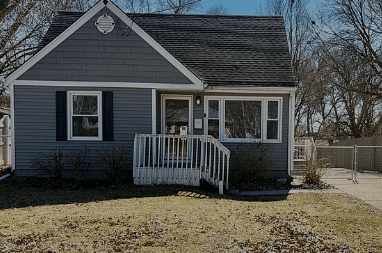
The Rate Ladder
| Rate | Cash Flow | CoC | DSCR | Verdict |
|---|---|---|---|---|
| 7.0% | $177 | 3.99% | 1.20 | Neutral |
| 6.5% | $222 | 4.99% | 1.26 | It Flows |
| 6.0% | $265 | 5.97% | 1.33 | It Flows |
| 5.5% | $308 | 6.93% | 1.40 | It Flows |
$1,632/mo rent · $2,800 annual property tax · Cap Rate 6.85% · View Zillow listing
The Des Moines flagship. Already passing the verdict at one Fed cut, and earning a comfortable 5.97% cash-on-cash by 6.0%. This is what a Des Moines investor is hoping for — a property that flips to It Flows after the first cut and just keeps strengthening.
1006 Leland Ave (3bd/1ba SFH, $210K)
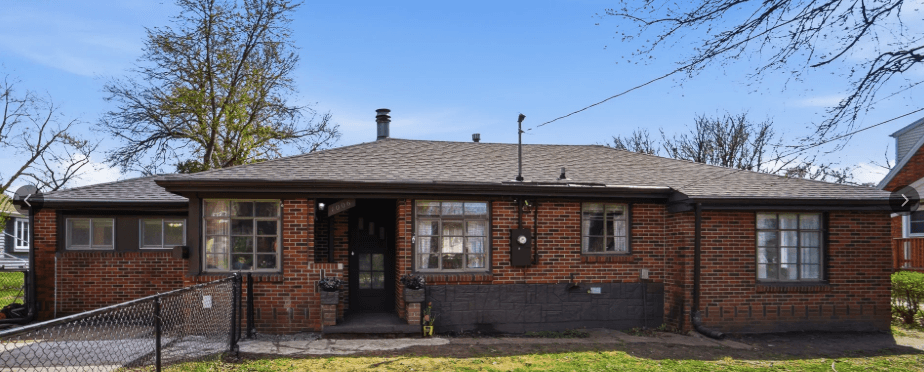
The Rate Ladder
| Rate | Cash Flow | CoC | DSCR | Verdict |
|---|---|---|---|---|
| 7.0% | -$2 | -0.05% | 1.00 | Doesn't Flow |
| 6.5% | $50 | 0.97% | 1.05 | Neutral |
| 6.0% | $101 | 1.97% | 1.11 | Neutral |
| 5.5% | $151 | 2.94% | 1.17 | Neutral |
$1,632/mo rent · $3,171 annual property tax · Cap Rate 5.72% · View Zillow listing
Same rent as Holcomb ($1,632), $31K higher price, and slightly higher property tax. The result: this property bleeds money at today's rates and never quite makes it to the "It Flows" verdict — even at 5.5%. Same market, same metro, same rent. The price-to-rent ratio decided the entire outcome.
1829 47th St (5bd/3ba duplex, $250K)
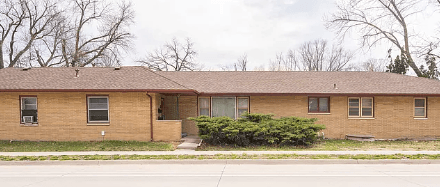
The Rate Ladder
| Rate | Cash Flow | CoC | DSCR | Verdict |
|---|---|---|---|---|
| 7.0% | $46 | 0.76% | 1.04 | Neutral |
| 6.5% | $108 | 1.79% | 1.09 | Neutral |
| 6.0% | $169 | 2.80% | 1.15 | Neutral |
| 5.5% | $229 | 3.79% | 1.21 | It Flows |
$2,000/mo rent (2 units) · $3,800 annual property tax · Cap Rate 5.97% · View Zillow listing
The patience play. Marginal Neutral at 7.0%, doesn't flip to It Flows until rates fall all the way to 5.5%. If you believe in continued cuts through 2027, this is the "buy now, refinance later" archetype. If you don't, it's three years of treading water.
Houston: The Appreciation Market That Quietly Cash-Flowed
Conventional wisdom on Houston: high property taxes (often 2.5%+ of assessed value), moderate rents, prices that have run up. Buy here for appreciation, not cash flow. We expected the Houston deals to look ugly compared to Iowa.
6718 Crosswell St (3bd/1ba SFH, $184.9K)
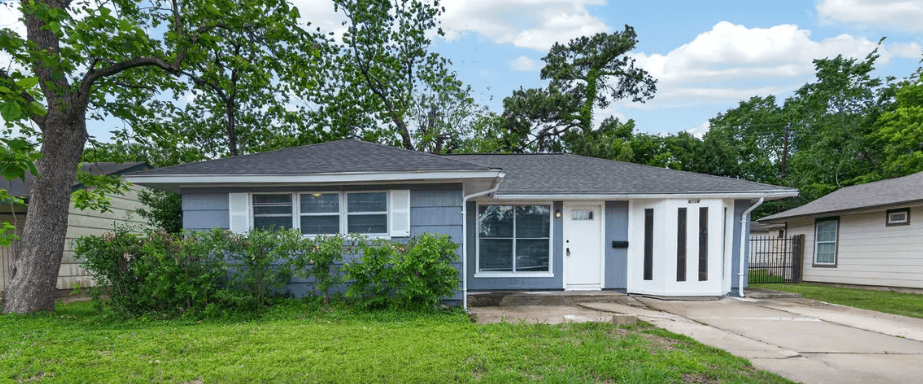
The Rate Ladder
| Rate | Cash Flow | CoC | DSCR | Verdict |
|---|---|---|---|---|
| 7.0% | $266 | 5.82% | 1.29 | It Flows |
| 6.5% | $312 | 6.83% | 1.36 | It Flows |
| 6.0% | $358 | 7.81% | 1.43 | It Flows |
| 5.5% | $402 | 8.77% | 1.51 | It Flows |
$1,800/mo rent · $3,200 annual property tax · Cap Rate 7.37% · View Zillow listing
The single best cash flow deal in our entire 24-analysis dataset. Already It Flows at 7.0%, hits all three industry benchmarks (Cap Rate ✓, DSCR ✓, CoC ✓) by 5.5%, and earns 8.77% cash-on-cash at the bottom of the ladder. In Houston. The supposed appreciation market.
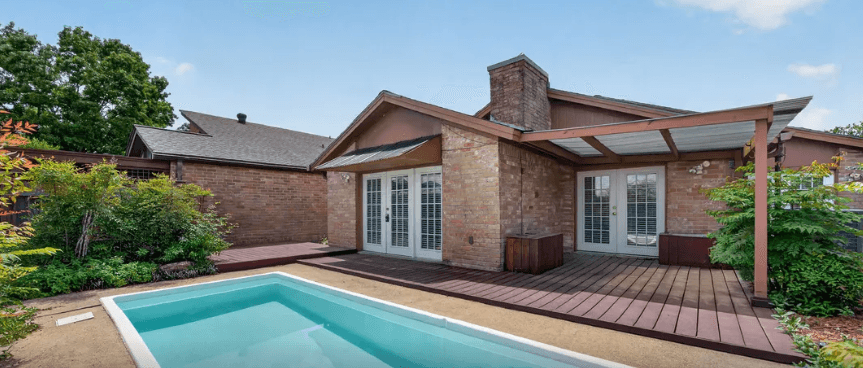
7710 Green Lawn Dr (3bd/2ba SFH, $230K)
The Rate Ladder
| Rate | Cash Flow | CoC | DSCR | Verdict |
|---|---|---|---|---|
| 7.0% | -$25 | -0.45% | 0.98 | Doesn't Flow |
| 6.5% | $32 | 0.57% | 1.03 | Neutral |
| 6.0% | $88 | 1.58% | 1.09 | Neutral |
| 5.5% | $143 | 2.56% | 1.15 | Neutral |
$1,800/mo rent · $4,000 annual property tax · Cap Rate 5.62% · View Zillow listing
Same rent as Crosswell ($1,800), $45K more in price, $800 more in annual property tax. The result is brutal: bleeding money today, and even at 5.5% it only crawls back to Neutral. Texas property tax punishes overpriced deals harder than any other input on the spreadsheet.
If you want to stress-test how property tax shapes your own deal, Will It Flow's rental property calculator lets you change every input — rate, tax, rent, vacancy — and re-runs cash flow, cap rate, DSCR, and cash-on-cash instantly.
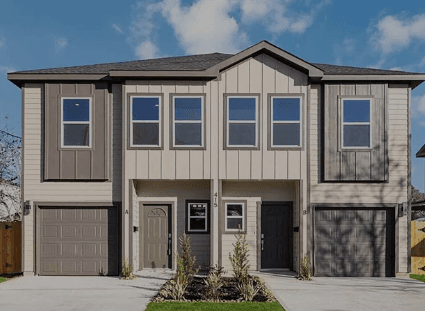
415 Gans St #A-B (6bd/6ba duplex, $439.9K)
The Rate Ladder
| Rate | Cash Flow | CoC | DSCR | Verdict |
|---|---|---|---|---|
| 7.0% | $14 | 0.14% | 1.01 | Neutral |
| 6.5% | $124 | 1.20% | 1.06 | Neutral |
| 6.0% | $231 | 2.24% | 1.12 | It Flows |
| 5.5% | $336 | 3.26% | 1.18 | It Flows |
$3,500/mo rent (2 units) · $7,600 annual property tax · Cap Rate 5.84% · View Zillow listing
The leveraged play. Razor-thin Neutral at 7.0%, but every cut moves the needle hard because the loan is so large — $329K. By 6.0% it's squarely in It Flows territory. If you believe in the rate path, this is the deal that captures the most upside per basis point.
Rate ladder and summary charts
What 24 Analyses Actually Taught Us
Three patterns emerged across the data, and they don't line up with the conventional wisdom:
- Market labels mis-ranked deals. Houston produced both the best print in our stack (Crosswell, 5.82% CoC at 7.0%) and the worst (Green Lawn, -0.45% CoC at 7.0%). Houston's within-market spread (6.27 pts) beat Des Moines's (4.04 pts). Leland (Des Moines) still lost to two Houston deals at every rate. Pick the property, not just the metro narrative.
- Rate cuts flipped 5 of 6 verdicts. Only Crosswell never changed tier — it already flowed at 7.0%. Holcomb and Green Lawn flipped on the first 50 bps step. Save marginal screens and re-run them after each Fed print; that is where sensitivity concentrates.
- Property tax did heavy lifting. Green Lawn ($4k/yr) and Gans ($7.6k/yr) gave up more cash than a 1.5% rate drop would have returned on payments. In ~2.5% tax states, that line item is a first-class stress test — not an afterthought.
Should You Wait for Cuts — or Buy Now and Refinance Later?
The honest answer is it depends on the deal, not the Fed headline. Use the three archetypes below as templates — then plug your property into the rental property calculator at multiple rates.
- Already flows at ~7% (Crosswell pattern). Buying now earns cash flow and amortization while you wait; a future refinance captures rate upside. Waiting mostly costs time in the deal.
- Marginal at ~7% (47th St pattern). A couple of cuts can change how the deal feels — but if prices firm when financing eases, the net benefit can shrink. Model both paths.
- Stays stressed across most of the ladder (Leland pattern). Deep cuts may only drag a bad buy to weak Neutral — not a strong income machine. The 1% rule is still a useful triage filter before you burn time here.
Stack cash flow, CoC, DSCR, and a forward view in one screen — not a single headline rate.
How to Run Your Own Rate Scenarios
Every investor should be running their target deals at multiple rates right now. Here's the workflow we used for this post — replicable in about 10 minutes per deal in the rental property calculator.
- Pick a real listing from Zillow, Redfin, or your local MLS. Real numbers beat hypothetical every time.
- Pull the rent comp from Will It Flow's built-in Rent Comps tool — don't inflate the estimate to make a deal work.
- Set your realistic rate (not the headline PMMS — add the 0.5–1.0% investment property spread).
- Save the analysis, then clone it 3 times. Change only the interest rate on each clone: 7.0% → 6.5% → 6.0% → 5.5%.
- Compare the four Dashboards side by side. Look at the verdict, the cash-on-cash, and the DSCR.
- If the verdict doesn't change across the ladder, the rate isn't your variable. Either the property cash flows no matter what (buy now), or it doesn't cash flow no matter what (walk away).
This is exactly how Will It Flow is built to work — instant recalculation on every input change, saved analyses so you can compare scenarios in seconds, and PDF deal sheets like the 24 above for every analysis.
Investor takeaway
Before you time the Fed, ground yourself in what moved in this dataset:
- If the deal fails badly at today's rate, waiting for a single 0.5% cut usually will not fix the spread — negotiate price, raise realistic rent, or pass.
- If the deal is close to break-even, a rate cut (or two) can change the verdict class — that is where the ladder earns its keep.
- If prices rise while rates fall, the payment benefit can disappear into higher basis and taxes. Model a lower purchase price alongside lower rates.
- The best next step is to test multiple purchase prices, rent levels, and financing bands on the same address — not to wait on a single magic number.
The "cash flow market vs. appreciation market" frame is a useful starting point and a weak final filter: our best Houston deal beat every Iowa deal at every rate here, while another Houston listing stayed underwater. Markets matter; the specific deal matters more.
Before you wait for lower rates
Test the same property at today's rate, a lower rate, and a lower purchase price so you are not guessing which lever actually moves your return.
Run Your Rental Property Numbers
Want saved analyses and PDF deal sheets like the exports in this post? Create a free Will It Flow account.
FAQ
- Should I buy a rental property now or wait for rate cuts?
- Base the decision on whether the deal works at today's realistic investment-property rate (roughly ~0.5-1.0% above the owner-occupied headline), not on news headlines alone. If it already cash flows with reserves at ~7%, buying now and refinancing later often wins because you keep rent, amortization, and appreciation while you wait. If it only works after multiple cuts, you are jointly betting on the rate path and the price path. Stress-test today's rate, 50-100 bps lower, and a lower purchase price before you wait.
- How much do rate cuts improve rental property cash flow?
- In our six-property ladder, each 50 bps step typically moved monthly cash flow by tens of dollars on these loan sizes - enough to swing cash-on-cash materially because your down payment stays fixed while cash flow changes. On a ~$200k loan, think on the order of ~$60-$70/month per 50 bps; larger loans move more. Scroll the per-property tables below for exact numbers.
- Can a lower mortgage rate make a bad rental deal work?
- Sometimes - but usually only when the deal is already close (slightly negative or neutral). A small payment change can flip a marginal verdict. If the deal fails badly at today's rate, waiting for a single 0.5% cut rarely fixes a broken spread between rent and all-in ownership cost. Purchase price, rent, taxes, insurance, vacancy, and operating expenses usually matter more than a small rate change.
- What matters more: purchase price or interest rate?
- Often purchase price (and defensible rent) matters more because price sets your loan size and often your tax bill at the same time. In several Texas examples here, property tax absorbed more cash than a large rate move would recover. Rate still matters on leverage-heavy deals — underwrite price and recurring expenses first, then optimize financing.
- Should investors analyze multiple rate scenarios?
- Yes. Run the same property at 7.0%, 6.5%, 6.0%, and 5.5% (or your lender's realistic band) and compare cash flow, DSCR, and cash-on-cash together. If the verdict barely moves across the ladder, rate is not the main lever on that property - price, rent, or expenses are.
Related Reading
- → Rental Property Analysis Checklist — The input list we still run before publishing any ladder like this.
- → BRRRR Strategy: What It Is and How to Run the Numbers — How value-add investors use rate-cut timing to maximize capital recovery on the refinance step.
- → What Is a Good Cash-on-Cash Return on a Rental Property? — The benchmarks by market type in today's rate environment.
- → Is the 1% Rule Still Relevant in 2026? — The quick screener before you run full rate-ladder analysis.
- → Cap Rate vs. Cash-on-Cash Return — Which metric actually matters when you're comparing deals.
- → What Is DSCR? — The metric lenders care about most when you apply for an investment loan.
- → Best States for Rental Property Investors in 2026 — Where the data says to look next.
- → Des Moines, IA Housing Market Data
- → Houston, TX Housing Market Data